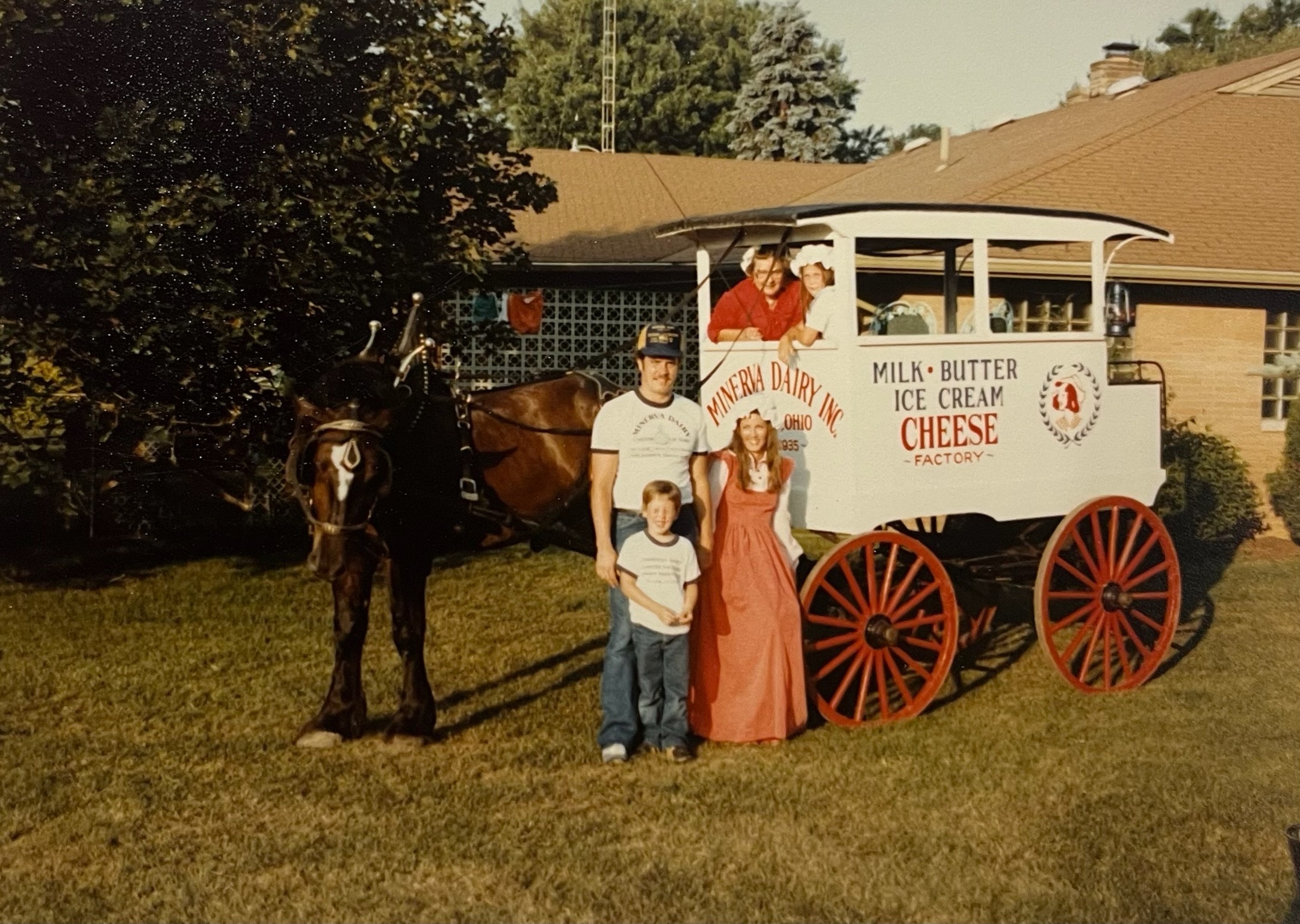
Pasture-raised butter is made from the milk of cows that have access to open pasture, where they are free to roam and graze on fresh grass. At Minerva Dairy, that milk comes from local family farms whose cows can choose between the pasture and a clean, dry barn.
Dairy labels can be confusing. Pasture-raised, grass-fed, and farm fresh all sound similar, but they do not mean the same thing. Shoppers ask us about this often, especially about what our cows actually eat.
So let us walk you through it, straight from our family farms: what pasture-raised means, how it compares to grass-fed, what goes into a cow’s diet, and why we think this approach makes better butter.
What Is Pasture-Raised Butter?
Pasture-raised dairy cows come from farms where they can graze on fresh grass outdoors instead of being confined to a barn. They can relax in the open air whenever they choose. Butter made from their milk is called pasture-raised butter.
The key word is choice. Weather is not always sunny, so the cows on our partner farms also have clean, dry housing that protects them from rain, cold, and hot sun. They can head out to the pasture or stay inside, whichever suits them that day.
Is Pasture-Raised the Same as Grass-Fed?
No. This is the most common mix-up we hear about. Pasture-raised describes how cows live, with access to pasture. Grass-fed describes what they eat, and the term can be used in different ways from brand to brand.
Our family farms do provide their cows with a grain ration alongside pasture grass, so the cows get the balanced nutrition they need to stay healthy and produce quality milk. Feeding a dairy cow only grass can lead to nutritional gaps, which is why our farmers work with nutritionists to balance each herd’s diet.
Term | What it describes | What to know |
Pasture-raised | How cows live | Cows have access to pasture to roam and graze |
Grass-fed | What cows eat | Usage varies by brand, so read labels closely |
Conventional | Typical industry practice | Cows may spend most or all of their time indoors |
Minerva Dairy | Pasture-raised | Cows choose pasture or barn, with a balanced diet of forages, grasses, and grains |
What Do Pasture-Raised Cows Eat?
Because they spend time on pasture, the cows on our partner farms enjoy a lot of variety. Their diet includes:
- Fresh grasses grazed right from the pasture
- Forages such as alfalfa, timothy, and clover
- Grains as part of a balanced ration
- Vitamins and minerals balanced by each farm’s nutritionist for the herd’s needs
The exact mix varies from farm to farm. We have over 50 family farms with pasture-raised cows that share our philosophy of humane treatment, and we trust each farmer to know their land and their herd best. The amount of grain in each diet varies, but every farm believes pasture-raised is about the cow’s lifestyle and choice.
Where Does Minerva Dairy Get Its Milk?
Minerva Dairy partners with local dairy farmers in the areas surrounding our creamery in Minerva, Ohio. These farms have been milking for generations, and they raise the breeds or crossbreeds that best suit their land.
No single breed dominates. From most to least common, our farms raise Holstein, Jersey, Ayrshire, Brown Swiss, Guernsey, and Milking Shorthorn cows. Just like America, our milk supply is a real melting pot.
How Do Family Farms Care for Pasture-Raised Cows?
Quality milk starts with comfortable, well cared for cows. Our family farms focus on a few basics every single day.
Clean, dry housing
Barns give cows shelter from bad weather, and the cows decide when to come in and go out.
Proper nutrition
Nutritionists help each farm build a balanced diet of forages, grasses, and grains.
Sanitary milking
Careful milking routines keep the milk clean and fresh from the start.
Veterinary care
Farms follow veterinary-recommended health programs to keep their herds healthy.
Antibiotic testing
All milk is tested for antibiotics before it is received at our dairy. Under FDA standards, any milk that tests positive is rejected.
Does Pasture-Raised Milk Make Better Butter?
We think so. Fresh milk from well cared for, pasture-raised cows is the foundation of the creamy, full flavor our family is known for. From there, how the butter is made matters just as much.
We churn our butter slowly in small batches. High-volume factories often use speed pumps that trap air in the butter, which takes away from texture and flavor. Slow churning keeps our butter thick, creamy, and rich, with 85% butterfat. You can read more about that process in why small-batch butter wins on quality.
And because butter cannot be made from homogenized milk, the cream naturally rises and separates, just as it has since our founder Max Radloff started the business in 1894.
How Can You Tell If Butter Is Pasture-Raised?
Here are a few things to check before you buy.
- Read the package. Look for the words pasture-raised and a clear description of how cows are raised.
- Visit the brand’s website. Trustworthy dairies explain where their milk comes from and how the cows live.
- Do not confuse terms. Grass-fed and pasture-raised are different, so check which one a label actually claims.
- Ask questions. A good dairy will answer them. You can find many of our answers on the Minerva Dairy FAQs page.
What Happens Between the Farm and Your Fridge?
Pasture-raised milk is only the beginning. Here is the short version of how it becomes the butter in your kitchen.
Fresh milk arrives daily
Milk from our partner farms comes into the creamery fresh. We pasteurize between 450,000 and 600,000 pounds of milk a day, six or seven days a week.
Cream rises and is separated
The rich cream is separated from the milk. That cream is what becomes butter.
Slow churning in small batches
We churn the cream slowly, in small batches, until the butterfat comes together into butter with 85% butterfat.
Packed into rolls and cartons
Finally, the butter is packed into 2 lb rolls and 8 oz cartons with two 4 oz quarter sticks, ready for stores across the country.
Want the full story? Read how better butter is made and our complete guide to better butter.
Pasture-Raised Butter Frequently Asked Questions
The questions we hear most about our cows and their milk.
Is Minerva Dairy butter pasture-raised?
Yes. Minerva Dairy butter is made with milk from local family farms with pasture-raised cows that can choose to graze in the pasture or rest in the barn.
Is Minerva Dairy butter grass-fed?
Our cows graze on pasture grass, but our farmers also feed a balanced grain ration for nutrition, so we describe our butter as pasture-raised rather than 100% grass-fed.
What do Minerva Dairy cows eat?
A mix of fresh pasture grasses, forages such as alfalfa, timothy, and clover, and grains, balanced by each farm’s nutritionist with vitamins and minerals.
How many farms supply Minerva Dairy?
We work with over 50 local family farms with pasture-raised cows that share our philosophy of humane treatment.
Ready to Butter Up With Pasture-Raised Butter?
Taste the difference that pasture-raised milk and slow churning make. Find Minerva Dairy butter at a store near you with our Store Locator or shop online through Instacart or Goldbelly for delivery straight to your door.
Explore our products, from sea salt to garlic and herb, and see why families have trusted our butter since 1894.