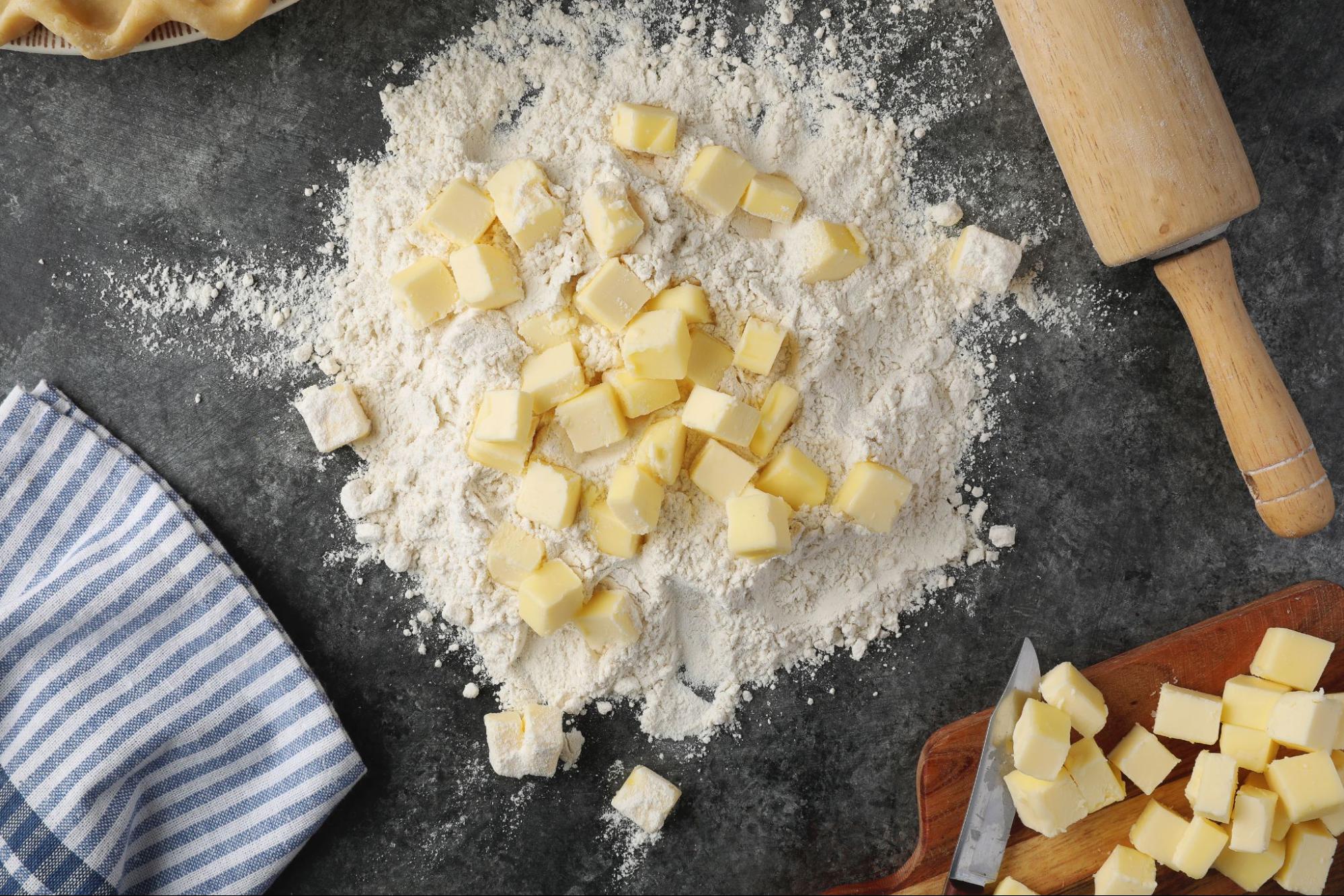
To cut butter into flour, start with very cold butter cut into small cubes, then work it into the flour with a pastry cutter, two knives, a fork, or your fingertips until the mixture looks like coarse crumbs with some pea-size pieces left. Those little pieces of butter are what make biscuits, scones, and pie crust flaky.
When a recipe says to cut in the butter, it is asking you to coat small pieces of fat in flour without letting the butter melt. It sounds technical, but it is one of the simplest skills in baking once you know what to look for.
Below, we cover every method, including what to do if you do not own a pastry cutter, plus how to tell when you are done and the most common mistakes to avoid this fall baking season.
What Does Cut in Butter Mean?
Cutting in means breaking cold, solid butter into small pieces and coating them with flour. You are not trying to blend the butter in smoothly like you would when creaming butter and sugar. Instead, you want separate little bits of butter scattered throughout the flour.
In the hot oven, those bits melt and release steam. The steam pushes the dough apart into thin, flaky layers. That is why the technique shows up in biscuits, scones, pie crust, shortcakes, cobbler toppings, and crumb toppings.
Why Does the Butter Need to Be Cold?
Temperature is everything here. If the butter softens, it smears into the flour and coats it completely, which gives you tender but not flaky results. Cold butter stays in distinct pieces.
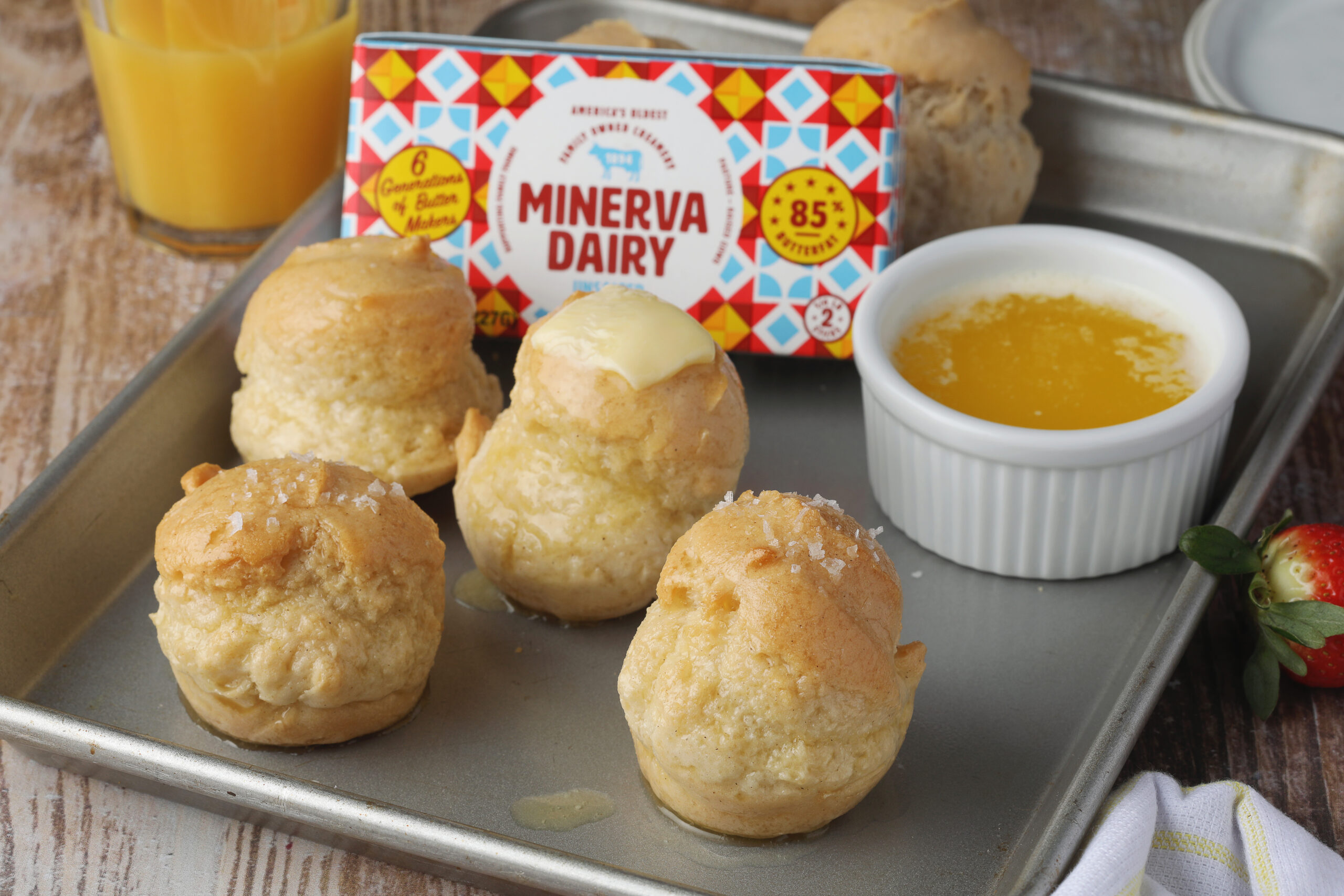
Cut the butter into 1/2 inch cubes and put them back in the fridge for 10 to 15 minutes before you start. On warm days, chill your bowl and flour too. High-butterfat butter, like Minerva Dairy’s 85% butterfat butter, has less water, so it stays pliable when cold and makes even flakier layers.
Here is a simple test. Press a cube of butter with your finger. If it dents slightly but still feels firm and cool, it is ready. If it feels soft, slick, or leaves a greasy shine on your finger, pop it back in the fridge. A few extra minutes of chilling is the easiest insurance policy for flaky biscuits and pie crust, so do not skip it, even when you are in a hurry.
What Are the Best Ways to Cut Butter Into Flour?
Every method works. Pick the one that matches the tools in your kitchen.
Method | How it works | Best for |
Pastry cutter | Press the wire or blade cutter down through the butter and flour, rocking and turning the bowl | Biscuits, pie crust, everyday baking |
Two knives | Hold a knife in each hand and slice past each other through the butter | No special tools needed |
Fork | Press and mash cubes of butter into the flour with the back of a fork | Small batches |
Fingertips | Pinch and rub butter pieces into flour quickly with cool fingers | Scones and crumb toppings |
Box grater | Grate frozen butter directly into the flour and toss | The flakiest biscuits |
Food processor | Pulse cold butter cubes with flour in short bursts | Big batches and pie dough |
How Do You Use a Pastry Cutter?
1. Whisk the dry ingredients
Combine flour, salt, sugar, and leavening in a wide bowl.
2. Add cold butter cubes
Scatter the butter over the flour and toss to coat each piece.
3. Press and rock
Press the cutter straight down through the butter, then rock it slightly. Turn the bowl and repeat, scraping butter off the blades as needed.
4. Stop at coarse crumbs
Keep going until most of the mixture looks like coarse crumbs and the biggest pieces of butter are about the size of peas.
How Do You Cut in Butter Without a Pastry Cutter?
No cutter, no problem. Here are three easy options.
Use two knives
Hold a butter knife in each hand, cross them in the bowl, and pull them past each other through the butter like scissors. It takes a little longer but works well.
Grate frozen butter
Freeze the butter for 30 minutes, then grate it on the large holes of a box grater straight into the flour. Toss with a fork. This is the fastest method and gives super flaky biscuits.
Use your fingertips
Pinch the butter cubes between your thumb and fingers, flattening them into the flour. Work quickly so the warmth of your hands does not melt the butter.
How Do You Know When You Are Done?
Look for a mix of textures. Most of the flour should look like coarse, sandy crumbs, with some pea-size and a few slightly larger flat pieces of butter visible. That variety is exactly what you want.
- For pie crust, leave a few larger, flat pieces about the size of small beans for big flaky layers.
- For biscuits and scones, aim for pea-size pieces.
- For crumb toppings, work it a bit further, until the mixture clumps when squeezed.
What Are the Most Common Mistakes?
- Using soft butter. It smears instead of staying in pieces. Always start cold.
- Overworking. If the mix looks like wet sand with no visible butter, the layers are gone. Stop sooner next time.
- Overprocessing in a food processor. Use short pulses and check often.
- Warm hands and kitchens. If the butter feels greasy, chill the bowl for 10 minutes before continuing.
- Adding too much liquid. Add liquid a little at a time, just until the dough holds together.
Which Recipes Use Cut-in Butter?
Once you master it, a whole world of fall baking opens up.
- Flaky biscuits, like our sage brown butter biscuits with parmesan
- Scones, like our cheddar bacon blueberry scones
- Pie crust for apple, pumpkin, and pecan pies. Find inspiration in our festive fall pie recipes
- Shortcakes, cobbler toppings, and streusel
Should You Use Salted or Unsalted Butter?
Most pastry recipes are written for unsalted butter so you can control the salt. If you only have sea salt butter, use it and reduce the added salt by about 1/4 teaspoon per stick. Wondering about shortening instead? Read butter vs shortening to see why butter wins for flavor.
Cutting in Butter Frequently Asked Questions
Quick answers for flaky baking.
What size should butter pieces be when cutting into flour?
Mostly coarse crumbs with some pea-size pieces. For pie crust, leave a few larger flat pieces for extra flaky layers.
Can I use melted butter instead of cutting in cold butter?
Not for flaky recipes. Melted butter coats the flour completely, which gives tender, cakey results instead of flaky layers.
Is grating frozen butter better than cutting it in?
It is faster and gives very even, flaky results, especially for biscuits and scones. Toss the grated butter with flour right away so it does not clump.
Can I cut in butter with a stand mixer?
Yes, with the paddle on low speed and cold butter cubes. Stop as soon as you see pea-size pieces, since mixers work quickly.
Ready to Butter Up Your Fall Baking?
Flaky layers start with cold, high-quality butter. Grab slow-churned Minerva Dairy unsalted butter near you with our Store Locator or shop online through Instacart or Goldbelly for delivery straight to your door.
Stock up for the season on our products page, where our 2 lb rolls are perfect for big batches of pie dough.